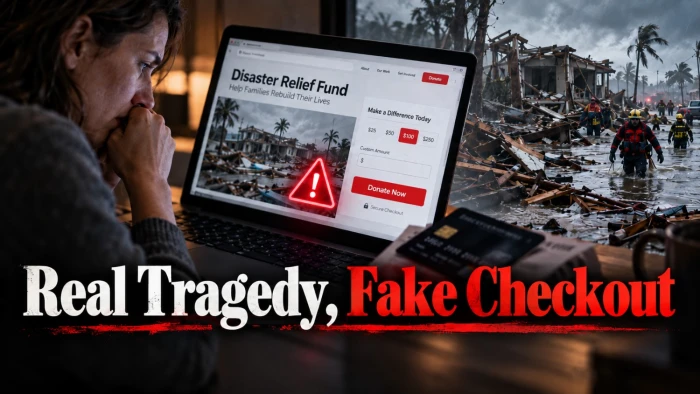
Our research desk spent close to a month inside this scam the way a target would meet it. We scrolled the feeds where these ads run, pulled live examples from Meta's public Ad Library, opened the links in an isolated browser and read the fake news pages all the way down to the sign-up form that always sits at the bottom. Then we went through the police statements, court rulings and leaked call-centre reporting that explain what happens after someone hands over a phone number.
Two things stood out. First, the ads look ordinary. No shady hacker energy, just a trusted face, a calm voice, a familiar news logo and a promise that sounds almost reasonable. Second, underneath, every version runs on the same machine. A British money expert, an American billionaire and an Indian industrialist all front the same funnel in different costumes.
This guide takes that funnel apart stage by stage, walks through seven documented cases, and shows where each trap could have been spotted.

KEY TAKEAWAYS
|
The numbers behind the problem
Deepfake celebrity ads sit inside the most expensive fraud category there is: investment scams. These four figures show the scale.
$7.2B Reported US losses to crypto investment fraud in 2025, the largest single loss category in the FBI's data. FBI IC3 2025 Internet Crime Report | $1.1B Lost in 2025 to investment scams that began on social media, more than half of all social media scam losses. FTC, April 2026 |
~$16B Revenue Meta's own 2024 documents projected from scam and banned-goods ads, about 10% of the total. Meta calls the estimate overly inclusive. Reuters, November 2025 | £200M+ Estimated yearly losses by UK victims to fraudulent online ads. Over half of UK adults say they have seen one. Ofcom, July 2026 |
What is actually being sold
The deepfake is not the product. It is a short burst of borrowed credibility whose only job is to earn a click. The real product is a "trading platform" with a name that keeps changing: Quantum AI, Immediate Edge, Bitcoin Code, Magna-FX and hundreds of lookalikes, most promising automated crypto or forex profits.
The videos are cheaper to make than most people assume. In the case of retiree Steve Beauchamp, reported by The New York Times, scammers took a genuine Musk interview and swapped in an AI clone of his voice. Reviewers of the deepfake Rishi Sunak clips noted they looked convincing unless you studied the mouths closely. That is the key point: hunting for glitches is not a reliable defence. Checking the context is.
The six-stage scam funnel
Regulators in Australia and New Zealand, threat researchers at Infoblox and Bitdefender, and the OCCRP's leaked call-centre files all describe the same sequence.
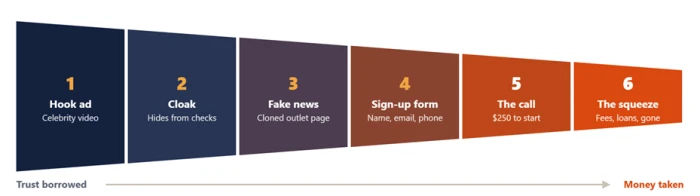
The funnel: six stages documented by regulators, threat researchers and the OCCRP's leaked call-centre files.
| 1 | The hook ad A paid post on Facebook, Instagram, YouTube or Google shows a famous face "revealing" a money platform, often framed as a TV segment. The Sunak ads used faked BBC footage. The first Martin Lewis clip copied the caption style of ITV's This Morning. |
| 2 | The cloak Before the scam page loads, a filtering service checks who is visiting. Moderators, bots and people outside the target country see a harmless page. Infoblox documented one group running its own cloaking service and mixing in ordinary shopping ads to dodge enforcement. |
| 3 | The fake news article A cloned BBC, CNN, CTV or local news page tells a dramatic story: an interview "went wrong", a celebrity leaked a secret, a regulator tried to shut it down. Security firm CTM360 counted more than 17,000 of these spoofed news sites. |
| 4 | The sign-up form Name, email, phone number. This is the real conversion. Your details become a lead that is passed to a call centre. |
| 5 | The "account manager" call Someone rings, often within hours. Australia's Scamwatch says the caller typically asks for about $250 to open the account. Beauchamp's first deposit was $248. |
| 6 | The dashboard and the squeeze The platform shows rising profits. Then come screen-sharing apps, WhatsApp chats, top-up requests, nudges to take out loans and, at the end, "fees", "taxes" or "commissions" to release money that never existed. |
Seven real cases, step by step
Every case below comes from police statements, court records or established news investigations. Each card shows how the scam unfolded and the moment it could have been stopped.
CASE 1 · JULY 2023 · UNITED KINGDOM The "Quantum AI" clip that opened the deepfake eraFace: Martin Lewis, with Elon Musk | Channel: Facebook, Instagram | Loss: not disclosed 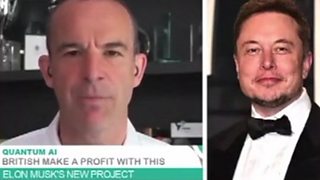 A video showed "Lewis" at his desk claiming Musk had already put more than $3 billion into a new project offering British citizens rare investment opportunities. Lewis flagged it on 6 July 2023 as the first deepfake scam he had seen using his own face and voice, and Meta said it removed the original. He had already taken Facebook to court in 2018 over fake ads using his name, a case that settled with Facebook donating £3 million to Citizens Advice. |
| Where it could have stopped: Lewis does not advertise investments at all. One look at his official channels ends the pitch. |
CASE 2 · AUGUST 2023 · BRIGHTON, UK Des Healey and the deposit-to-withdraw trap (Victims Journey)Face: Martin Lewis and Elon Musk | Channel: Facebook | Loss: about £75,000 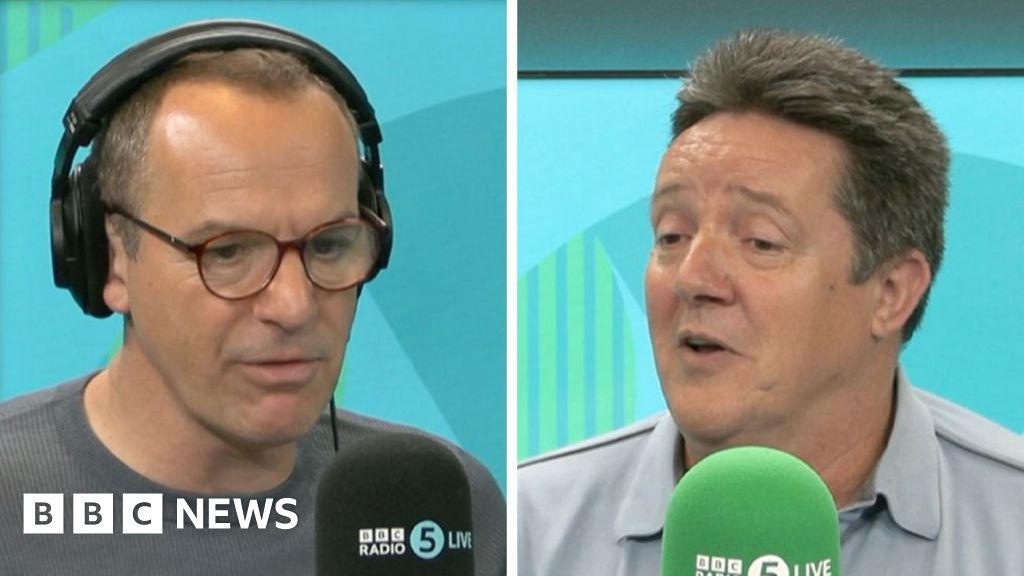 After leaving his details on a fake bitcoin ad, Healey was told to move £5,000, his savings, into a Revolut account, from which it was moved on as an "investment". To get that £5,000 back, he was told to add £10,000 more. The scammer bonded with him over Manchester United and family life, then pushed him into loans totalling £70,000 from four banks. He was left with debt he says he still cannot clear. |
| Where it could have stopped: any platform that demands a bigger deposit before you can withdraw is not a platform. |
CASE 3 · LATE 2023 · UNITED STATES Steve Beauchamp's $690,000 "Musk" investmentFace: Elon Musk (real interview, cloned voice) | Channel: online video | Loss: more than $690,000 The 82-year-old retiree opened an account with a firm called Magna-FX for $248, then drained his retirement account over several weeks. At one point an agent used software to take control of his computer and shuffle funds. To withdraw, he was asked for a $3,500 admin fee and a $3,500 commission, then $20,000 more to release about $200,000. After that, the website, phone line and email addresses vanished. Asked about the video, he said that if he had to pick Musk out of a line-up, "that's him." |
| Where it could have stopped: handing a stranger remote control of your computer is the point of no return. |
CASE 4 · DECEMBER 2023 TO JANUARY 2024 · UNITED KINGDOM 143 deepfake Rishi Sunak ads and a fake BBC pageFace: Rishi Sunak and a BBC presenter | Channel: Facebook | Reach: up to 400,000 people  Research firm Fenimore Harper found 143 ads running between 8 December 2023 and 8 January 2024, funded with up to £12,929 from 23 countries including the US, Turkey, Malaysia and the Philippines. One faked BBC newsreader Sarah Campbell announcing that Musk had built a stock market app the government was testing. The ads linked to a spoofed BBC News page selling the scheme. Meta said most of the ads were disabled before the report was published. |
| Where it could have stopped: the logo said BBC. The address bar did not. |
CASE 5 · 2022 TO 2025 · TBILISI, GEORGIA The "Scam Empire" call centre behind the facesFaces: Martin Lewis, Zoe Ball, Ben Fogle | Channel: Facebook and Google ads | Loss: $35.3 million 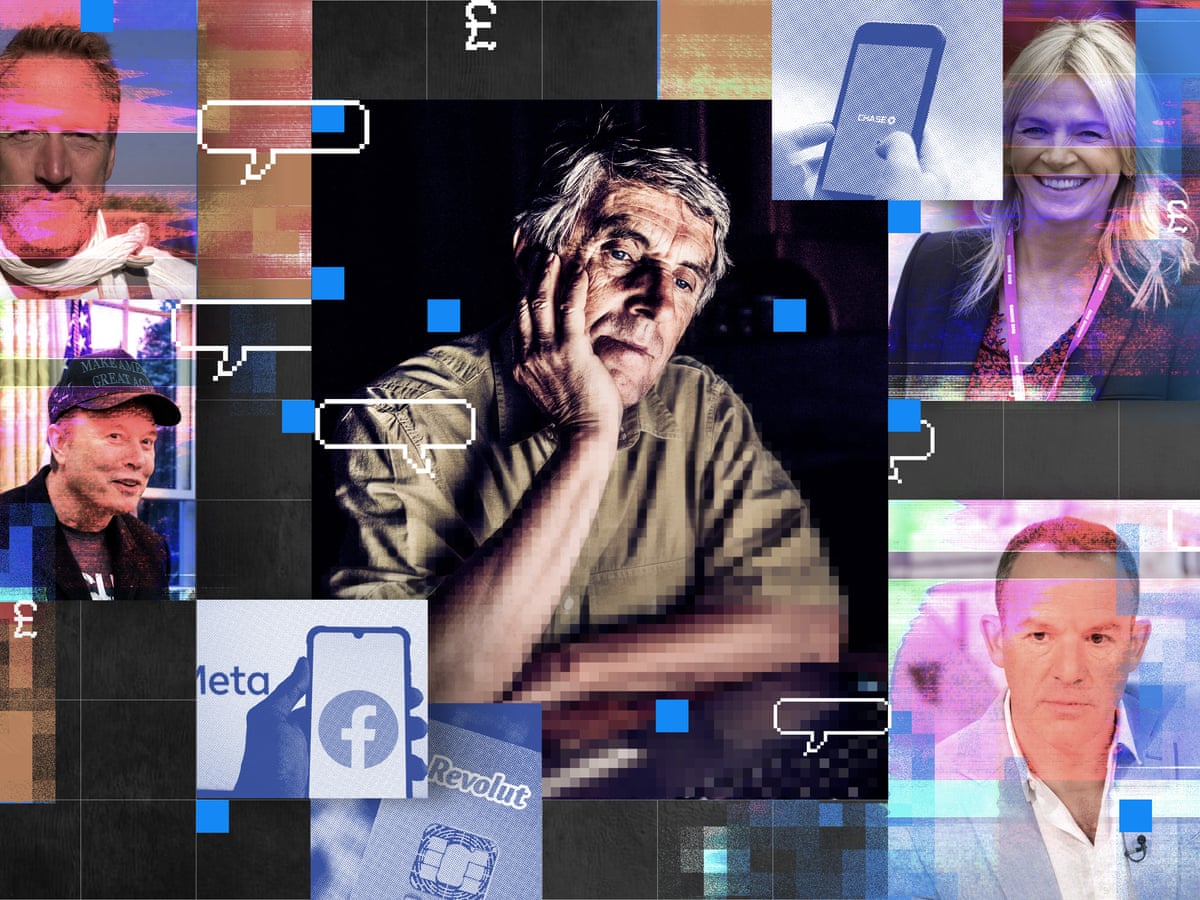 A 1.9-terabyte leak obtained by Swedish broadcaster SVT and shared with OCCRP, The Guardian and around 30 partners exposed a firm called A.K. Group. About 85 agents in Tbilisi, who called themselves "skameri" (Georgian slang for scammers), took roughly $35 million from more than 6,000 people in the UK, Europe and Canada from May 2022 onward, with UK victims hit hardest. One victim said his losses began with a video of Ben Fogle "trading". The full leak covered at least 32,000 victims and $275 million across two networks. Georgian prosecutors opened a criminal case after publication. |
| Where it could have stopped: the ad only collects leads. The theft happens on the phone, so never let an unsolicited caller manage your money. |
CASE 6 · APRIL TO JUNE 2024 · MUMBAI, INDIA A doctor, a deepfake Ambani reel and 16 bank accountsFace: Mukesh Ambani | Channel: Instagram reel | Loss: Rs 7.1 lakh 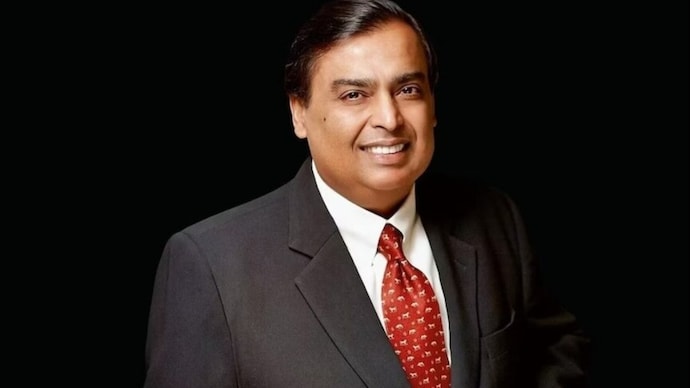 A 54-year-old Ayurveda doctor from Andheri saw a reel on 15 April in which a fake Ambani praised the "Rajiv Sharma Trade Group" and its BCF Academy. A web search showed claimed offices in London and at Bandra Kurla Complex, which reassured her. Between 28 May and 10 June she paid Rs 7.1 lakh into 16 different bank accounts. Her dashboard showed a profit of around Rs 30,000, yet every withdrawal attempt failed. |
| Where it could have stopped: a regulated broker never asks you to pay into a rotating list of bank accounts. |
CASE 7 · SEPTEMBER 2026 · NORTHERN IRELAND £250,000 lost through an ad, WhatsApp and borrowed moneyFace: unnamed financial celebrity | Channel: social ad, then WhatsApp | Loss: £250,000  The Police Service of Northern Ireland said a person in the Ards and North Down area saw an AI-generated video of a well-known financial figure, was then handled over WhatsApp, persuaded to open several online accounts, give remote access to their computer and borrow money to keep investing. BBC News NI reported seeing similar ads using Martin Lewis, Peter Jones and Steven Bartlett. Police stressed that an apparent celebrity endorsement is never proof an investment is genuine. |
| Where it could have stopped: the move to WhatsApp. Three years on, the script has barely changed. |
Case comparison table
Lined up side by side, the pattern is hard to miss.
| Case | Face used | Opening ask | Escalation tactic | Reported loss |
| Quantum AI clip (2023) | Lewis, Musk | Sign-up form | Removed early | Not disclosed |
| Des Healey (2023) | Lewis, Musk | £5,000 | Deposit to withdraw, bank loans | ~£75,000 |
| Steve Beauchamp (2023) | Musk | $248 | Remote access, release fees | $690,000+ |
| Sunak ads (2023/24) | Sunak, BBC presenter | Fake BBC page | Call-centre follow-up | Reach ~400,000 |
| Scam Empire (2022 to 2025) | Lewis, Ball, Fogle | Small deposit | Scripted pressure calls | $35.3M total |
| Mumbai doctor (2024) | Ambani | Academy sign-up | Fake profit, 16 accounts | Rs 7.1 lakh |
| Northern Ireland (2026) | Unnamed | Ad, then WhatsApp | Remote access, borrowing | £250,000 |
Why the fakes work
Borrowed trust The faces are picked for credibility on money, not fame. Surrey's Police and Crime Commissioner has called Lewis the high-profile figure fraudsters impersonate most often. | A tiny first step A 250 deposit feels like a test, not a commitment. A climbing dashboard and sometimes one small successful withdrawal do the rest of the persuading. | Ad systems that pay Reuters reported Meta needed 95% certainty before auto-banning a suspected fraud advertiser and charged some suspects higher ad rates instead. Meta disputes how the documents were characterised. |
Red flags table
Any one of these is a reason to stop. Two or more together is a scam.

| What you see | What it really means |
| A celebrity "revealing" a trading or crypto platform in a paid ad | Real public figures do not launch investment apps through sponsored posts. |
| A news page with a familiar logo | Check the web address. If it is not the outlet's real domain, it is a clone. |
| A story about a "banned" interview or a regulator trying to stop it | Scripted urgency. OCCRP found one using CTV branding and actor Sandra Oh. |
| A minimum deposit of around 250 | The standard entry ticket for these call centres. |
| A call from an "account manager" soon after signing up | Your details were sold as a lead. |
| A request to install a screen-sharing app | They want access to your banking. |
| A move to WhatsApp or Telegram | Off-platform, harder to trace, easier to pressure you. |
| Fees, tax or commission before you can withdraw | The money is already gone. This is the final squeeze. |
| Encouragement to borrow or take loans | Seen in the Healey and Northern Ireland cases. Stop immediately. |
| Payments to several different bank accounts | Mule accounts. A regulated firm uses one verified account in its own name. |
What platforms and courts are doing
What has improved
| What still falls short
|
| Country | Who | Action | Status |
| UK | Martin Lewis | Sued Facebook over fake ads (2018) | Settled; £3M to Citizens Advice |
| US / Australia | Andrew Forrest | Sued Meta over crypto ads using his likeness | Ongoing; sanctions against Meta, Aug 2026 |
| Japan | Yusaku Maezawa; 30 victims | Lawsuits against Meta (2024), victims seeking ¥435M | Filed in five district courts |
| UK | Ofcom | Draft fraudulent advertising code | Consultation closes 2 Oct 2026 |
Already paid? Do this now
| 1 | Call your bank first Use the number on your card. In the UK, dialling 159 connects to most major banks. Transfers can sometimes be frozen if you move within hours. |
| 2 | Cut off access Uninstall any screen-sharing app, stop all contact, and change banking and email passwords from a different device. |
| 3 | Report it officially UK: Report Fraud (reportfraud.police.uk, 0300 123 2040), which replaced Action Fraud. US: ic3.gov and reportfraud.ftc.gov. Australia: Scamwatch. India: cybercrime.gov.in or helpline 1930. |
| 4 | Ignore "recovery" offers People promising to retrieve your money for an upfront fee are usually the same networks running a second scam. |
Final verdict
After weeks of clicking through these ads, reading the cloned news pages and following each case to its end, our desk came away with one firm conclusion: you cannot out-watch a deepfake. Several of the clips we reviewed held up on a phone screen better than we expected, and the people who lost money in these cases were not careless. A doctor, a retiree, a kitchen fitter. Each one was walked carefully from a familiar face to a form, from a form to a friendly caller, and from that caller to a loan. The good news is that the funnel is far easier to spot than the face. The fake BBC address, the 250 deposit, the WhatsApp move, the screen-sharing request and the fee to withdraw show up in case after case, country after country. None of them needs any technical skill to recognise. |
| Our rule: treat every celebrity investment ad as fraud until your national regulator's register proves otherwise. |