Two weeks spent inside court indictments, FBI case files and malware teardowns turned up one detail that outlasts the rest. It was not the money. It was the clock. A man in Aventura, Florida registered a Hurricane Katrina donation site a day before the storm reached land. By the time New Orleans flooded, his checkout page was already live and collecting.
That is the whole trick in one sentence. Fraud does not wait for the water to recede. The honest responders are still counting bodies and setting up tents while the counterfeit versions are already search-optimized, already on social feeds, already asking for your card. For the first day or two after a catastrophe, a surprising share of the donation appeals floating around are simply fake, not because scammers are more numerous, but because the real organizations have not finished writing theirs yet.

What follows is not a lecture about being careful online. It is a look at specific sites that actually existed, run by people who were actually caught, and a short, practical routine that takes under two minutes and defeats nearly all of them. The grief is real. The checkout, too often, is not.
THE CORE PROBLEM The question after a disaster is rarely “is this a good charity.” It is “am I actually on that charity’s website, or a copy built yesterday?” |
Why the fakes arrive first
Disaster giving runs on emotion and speed, and scammers have quietly industrialized both. A domain name costs a few dollars and takes minutes to register. A convincing checkout page can be cloned from a legitimate charity in an afternoon. There is no gatekeeper who checks whether the person registering hurricane-relief-fund.org has any intention of helping anyone.
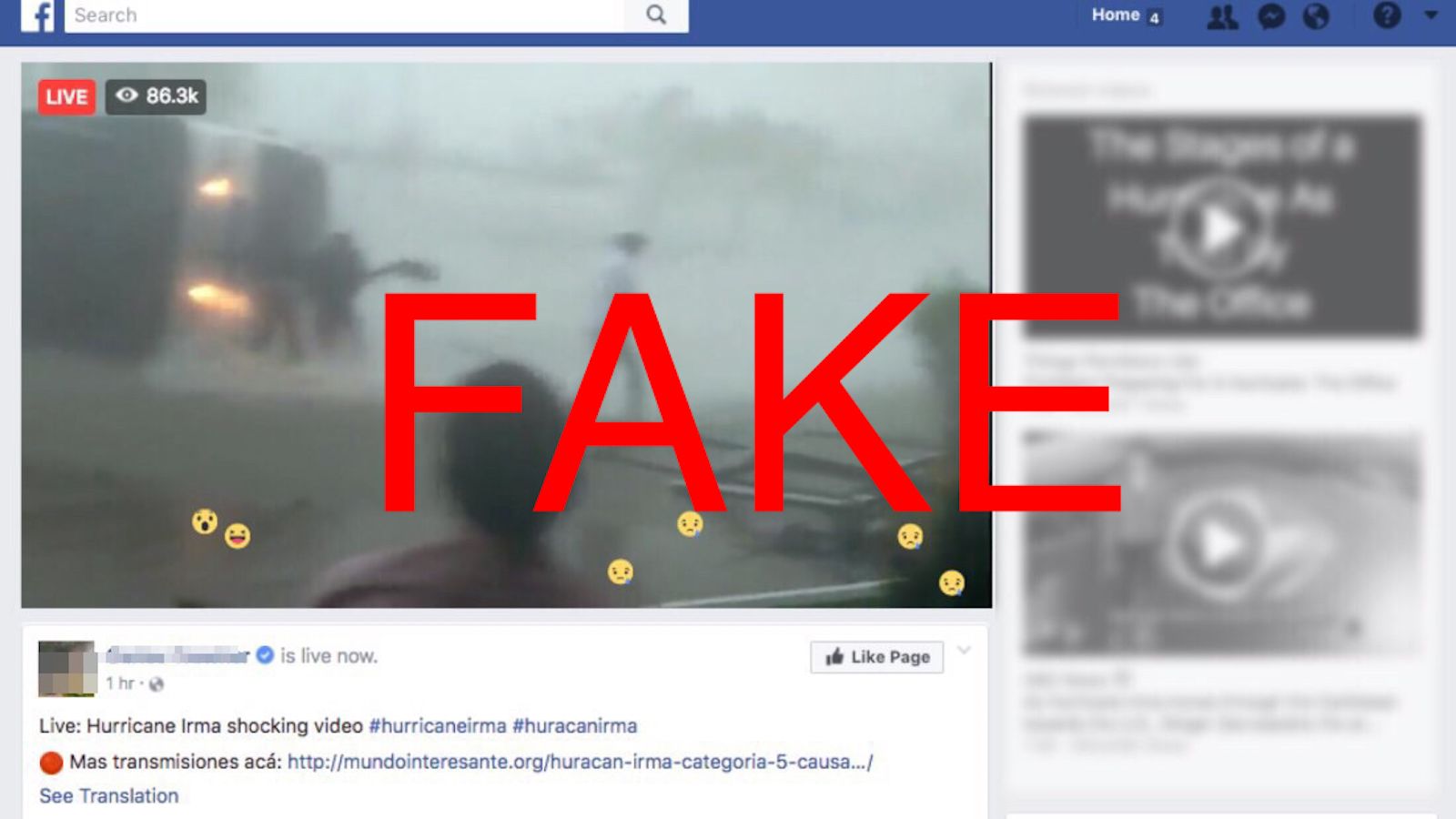
1 The news breaks A hurricane, quake or attack hits headlines. Public attention and the urge to help both spike within hours. | 2 Domains get grabbed Scammers register copycat names using the event and words like relief, fund or victims. Many go live the same day. |
3 Borrowed trust spreads it A fake appeal reposted by a well-meaning friend arrives wrapped in that friend’s credibility. The share does the selling. | 4 The money leaves the rails Payment is pushed to channels no one can claw back: gift cards, wire transfers, payment apps and crypto wallets. |
Distance helps the con, too. When a disaster strikes a faraway country, donors have no local context to check an appeal against, so a familiar-sounding name does a lot of heavy lifting. That is why floods and earthquakes abroad produce some of the most aggressive fake-site waves.
How big is this, really?
Big enough that four federal agencies now issue a near-identical warning every hurricane season. The hard numbers are striking even though most victims never report the loss.
~$96M Reported losses to fake charities & relief campaigns, FBI IC3, 2024 | 4,500+ Charity & crowdfunding fraud complaints to IC3 in that single year | 2,300+ Katrina-linked donation sites the FBI flagged for review in 2005 | 900+ Defendants charged by the Katrina Fraud Task Force over three years |
Figures: FBI Internet Crime Complaint Center (2024) and US Department of Justice Hurricane Katrina Fraud Task Force reports. Reported losses are a floor, not a ceiling, since embarrassment keeps most donors silent.

Set that against a backdrop of Americans giving well over half a trillion dollars to charity each year across more than 1.5 million tax-exempt organizations, and you can see why fraudsters treat tragedy as a seasonal business. The pool is enormous, the givers are motivated, and the window is predictable.
Five sites that were exactly this
These are not hypotheticals. Each one was investigated, documented and in most cases prosecuted. I have kept the details to what the record actually shows.
KATRINA · 2005FAKE PILOT APPEAL The “mercy flights” that never flew AirKatrina.com | |
Gary Kraser, of Aventura, Florida, posted on aviation message boards that he was a pilot running supply-and-rescue flights into storm-hit Louisiana. Sympathetic strangers helped him stand up a site to cover his fuel costs. Suggested gifts ran from roughly 100 dollars for a partial tank to 3,000 dollars for a full one, with the promise that every nickel would go straight into the planes.  There were no flights. Donations flowed into a personal PayPal account. The site went up before Katrina even made landfall, which made Kraser the first person federally charged for a Katrina internet charity scam.
|
KATRINA / RITA · 2005BRAND IMPERSONATION$48,000 TAKEN A counterfeit Salvation Army homepage | |
Two brothers in Texas built a page that announced itself as The Salvation Army International Home Page and solicited hurricane relief donations through PayPal. To move the money, they opened multiple accounts using other people’s names and Social Security numbers. 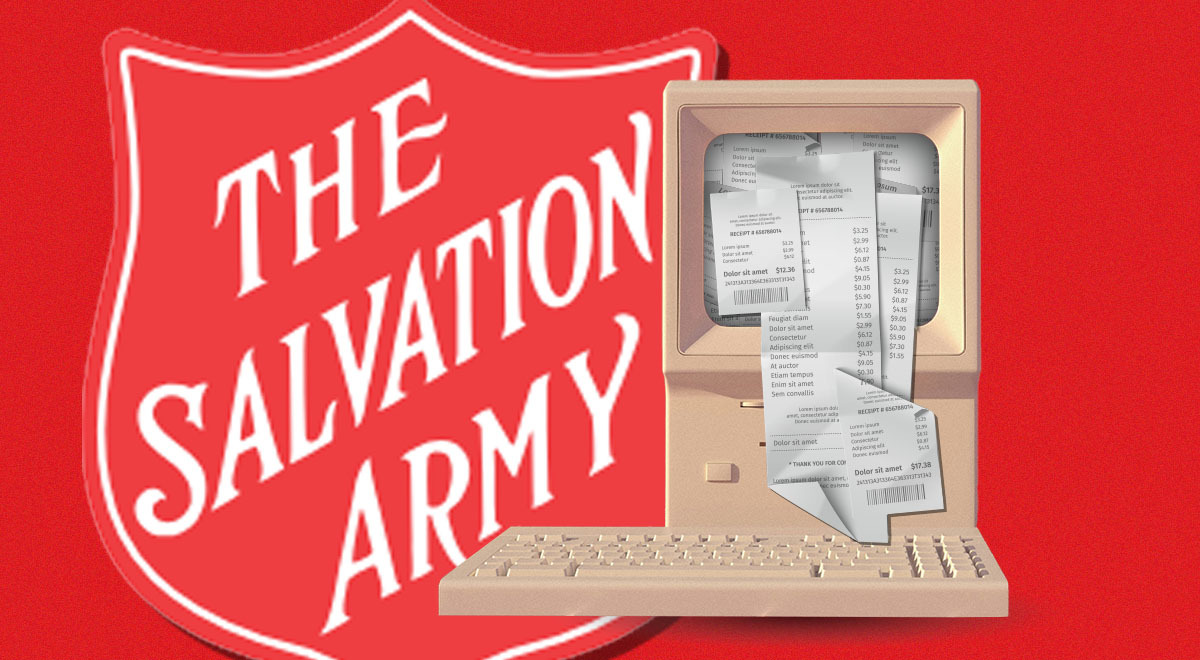 The site collected more than 48,000 dollars before every account was frozen. The use of a trusted, instantly recognizable brand is the oldest move in this playbook, and still one of the most effective.
|
KATRINA · 2005DOMAIN SQUATTING The man who bought the obvious names katrinahelp.com · katrinarelieffund.com | |
A Florida man operating under the alias Demon Moon registered a cluster of Katrina-themed domains, the exact phrases a worried donor would type into a browser, and set them up to solicit money. State officials sued to pull the sites down. At least one was still asking for donations while the case was underway. This case is a useful reminder that a web address matching your search is proof of nothing. A domain is a product you can buy, not a credential you have to earn.
|
TURKEY & SYRIA QUAKE · 2023CLONED RELIEF SITE A fake Red Cross, redirecting to PayPal redcrossturkey.com · help-turkey.org | |
After the February 2023 Kahramanmaras earthquake, researchers at the security firm Cyble documented a spray of fraudulent donation pages. One posed as a Turkish Red Cross site. Another, help-turkey.org, sent anyone who clicked Make a Donation to a PayPal page to finish the transfer.  The wave spread across email, social video and QR codes, and some posts leaned on AI-generated rescue images to manufacture urgency. Investigators flagged roughly 18 suspect crypto donation wallets, and PayPal said it was scrubbing well over a hundred questionable fundraisers tied to the quake.
|
TURKEY & SYRIA QUAKE · 2023RECYCLED CRYPTO CHARITY A “foundation” that changed causes overnight | |
Bitdefender’s analysts tracked an email campaign for a so-called Wladimir Charity Foundation. It had originally been set up to collect crypto for war-displaced Ukrainians, then pivoted its appeal to the Turkey and Syria earthquake without missing a beat. One of its Bitcoin wallets showed activity stretching back to 2021, with transactions worth around 100,000 dollars. Same wallet, same scripts, new tragedy. For a professional operation, the disaster is interchangeable. Only the headline on the email changes.
|
And this is not a closed chapter. In 2026 the FTC flagged five fake-charity surges at once, tied to floods in Nepal and Tibet and earthquakes in Venezuela, Japan and Colombia. The pattern is now so reliable that the warning can almost be pre-written.
| Case | Event / Year | Method | What happened |
| AirKatrina.com | Katrina, 2005 | Fake pilot, PayPal | Live before landfall; first federal charge of its type |
| Fake Salvation Army page | Katrina/Rita, 2005 | Brand clone + stolen IDs | $48k taken; 111 & 105 month sentences |
| Demon Moon domains | Katrina, 2005 | Domain squatting | Sued by state; sites ordered down |
| redcrossturkey.com | Turkey/Syria, 2023 | Cloned site, PayPal redirect | ~18 scam wallets; 100+ fake fundraisers flagged |
| Wladimir foundation | Turkey/Syria, 2023 | Recycled crypto charity | Reused wallets; ~$100k historic activity |
The tells that give a fake away
Across every case above, the same handful of signals keep showing up. None is proof on its own. Two or three together should stop you before the card number goes in.
Manufactured urgency A 24-hour match or donate tonight push. Real charities will gladly take your gift next week, after you have read about them. | A name that is almost right One word off a famous charity, or a .com where the real group uses .org. Close resemblance is a design choice, not a coincidence. |
Odd payment demands Gift cards, wire transfers, cash, payment apps or crypto. No legitimate charity requires untraceable money. | No EIN, no specifics Vague mission, no tax ID, no mailing address, and no answer to what percentage reaches victims. |
Social-only existence The appeal lives entirely in a DM, a comment reply or a brand-new account with no verifiable footprint. | Too-perfect disaster images AI-generated rescue scenes and recycled footage are now standard dressing for 2023-era and later campaigns. |
The two-minute verification routine
This is the part worth bookmarking. Run these steps before you give to any organization you did not already know and trust yesterday. All of these tools are free.
| Before your card number goes anywhere | ||
| ||
| ||
| ||
| ||
|
A SHORTCUT THAT ALMOST ALWAYS WORKS Skip the link in the post entirely. Open a new tab, type the charity’s real name yourself, and give there. Fraud depends on you clicking their door rather than walking up to the real one. |
If you already gave to a fake
Speed matters here, so act the same day you suspect it. None of these guarantees a refund, but reports feed law enforcement tracking and can help freeze accounts before more is lost.
| Who to contact | How | For what |
| Your bank or card issuer | Call the number on your card | Dispute the charge, request a reversal, flag the account |
| Federal Trade Commission | ReportFraud.ftc.gov | Any suspected charity or disaster scam |
| FBI IC3 | ic3.gov | Online fraud and fake donation sites |
| DOJ National Center for Disaster Fraud | 866-720-5721 (24/7) | Any disaster-related fraud or FEMA impersonation |
The final verdictAfter all those files, the pattern is clear. The uncomfortable part of this problem is that the instinct being exploited is a good one. The urge to help a stranger within minutes of seeing their worst day is exactly the instinct the world should want more of, and it is precisely the thing the fakes are built to harvest. Caring less is not the fix. The fix is a small, deliberate delay between the feeling and the payment. Almost every case in the record collapses under two minutes of friction: an IRS lookup, a watchdog check, a reversible payment method, and the simple habit of typing the charity’s name into a fresh tab instead of trusting the link someone handed over. The scams move fast because they count on donors moving faster. Slow down by one coffee’s worth of time and most of them lose. So the honest recommendation is not be suspicious of everyone. It is give generously, but give on your own terms. Decide who to trust before the next disaster, not during it. Keep a short list of established responders already verified, and when the headline hits, go straight to them. The victims are real and they genuinely need the help. The only thing standing between a donation and them is a checkout page worth thirty seconds to confirm is real. Give like it matters, because it does. Just make sure the door is the right one. |